Gas Station Dance Meme: The Original Video, Song and AI Remakes
Where the three-person dance came from, who appears in the original, and how to tell a character swap from a newly generated video.
Last updated: 2026-10-05
The gas station dance is a three-person video format: one person dances, another films, and a third gets out of a car. AI remakes change the cast or generate a similar scene. If you want your friends in the version you remember, first check which of these methods a tool uses.
Where did the original video come from?
Memepedia's September 2026 report traces it to a video posted by Adel Veigel on July 1, 2024. Its account names Ravshan Dzhulpaev as the dancer, Mikhail Litvin as the person filming, and Adel as the person getting out of the car. It identifies the music as Akcent's On And On (When the Lights Go Down).
The report links to Adel's Instagram reel and describes a new wave of AI remakes in September 2026. The Russian name “Делай” comes from a shout in the source video. T—J's September 25 article about AI video editing also connects the trend to the three creators' 2024 video.
The original date and song are reported by Memepedia; we have not independently verified the Instagram post. The sources do not establish the first AI remake or the trend's total reach.
Why does changing the cast work so well?
Our reading of the format is that it gives the viewer a recognizable setup and a small reveal. The opening dancer establishes the scene. The person filming makes it feel like a friend recorded it. The car door brings in someone else.
Keeping that structure while changing the people creates a simple joke: the viewer knows what is coming, but not who will appear. A three-person cast also makes it easy to assign parts within a friend group. One person gets the opening, another appears on camera, and someone else gets the entrance.
This is our interpretation of the format. A clip can work as a private joke without becoming a widely shared post.
“Same video” can mean three different things
Editing a finished clip changes captions, length or soundtrack. A CapCut-style project can help with editing, but a timeline alone does not put three new people into the footage.
Replacing characters in a reference video uses the source clip as an input. The important question is what survives the edit: camera movement, body motion, background, clothing and audio. Do not assume that every “face swap” replaces the whole person.
Generating a new scene from photos makes another video with a similar story. It can follow the dancer → selfie → car-exit → returning-selfie sequence without copying the original choreography.
Choose the method that matches your goal: editing a clip, preserving reference motion, or making a new scene.
Which one does this website demonstrate?
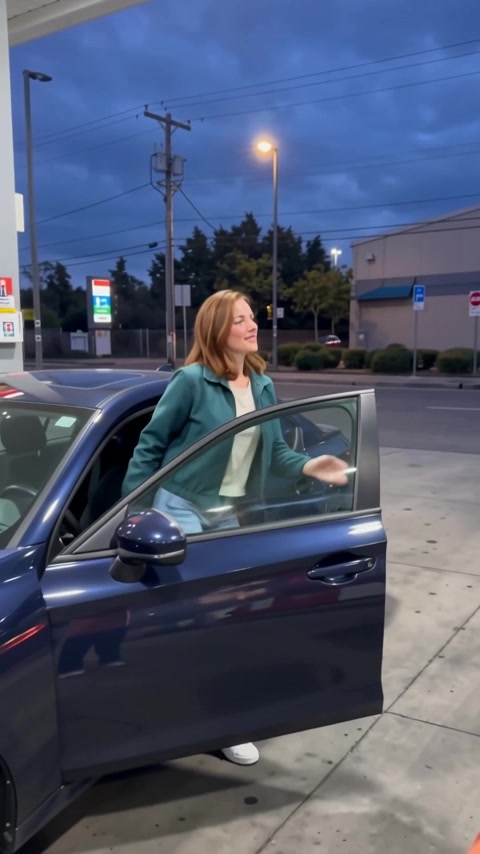
The car-door reveal in our generated example, not a frame from the original creator's video.
Our complete input-to-output example was generated from three fictional adult portraits. No original dance video was supplied for that test. It is a newly generated scene with generated audio, not the original reel with three people precisely replaced.
If your goal is the exact dance and original soundtrack, that difference should decide whether this result suits you. If you want a new scene featuring your chosen cast, start with the three-photo tutorial.
What should I check before choosing a tool?
Watch a full result, not just the opening frame. Check whether the same person returns at the end, whether the car-exit character is recognizable, and whether the sound is the track you expected. Look for an input/output pair so you can judge resemblance yourself.
For a friend-group clip, choose the roles before uploading. For a clip that must reproduce the original, ask whether the tool actually takes that reference video as input. The label “gas station dance AI” does not answer that question.
Research checked October 5, 2026. Found an error in the background or a better primary source? Send us the link.